


Don’t Miss Ashtami 2025: Maa Mahagauri Puja Can Erase Lifelong Struggles
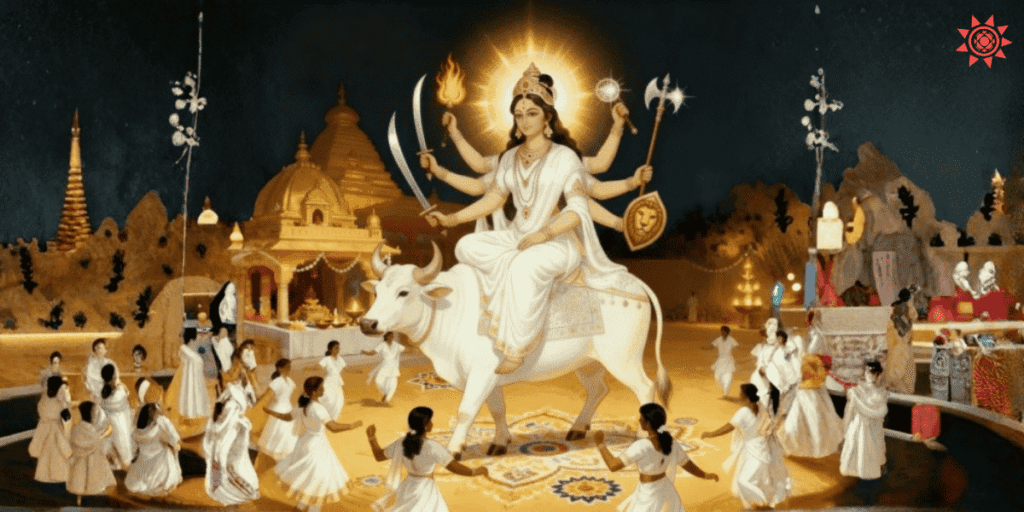
The 8th Day of Navratri 2025 is dedicated to Maa Mahagauri, the goddess of purity, calmness, and divine strength. Dressed in serene white and riding a bull, she symbolizes balance, harmony, and spiritual awakening. Her name means “extremely fair,” and her story is one of penance, blessings, and transformation. After her intense tapasya to please Lord Shiva, she regained her radiant beauty, becoming the symbol of purity and kindness.
Want to unlock stronger blessings this Navratri? Consult the astrologers at Prashna Kundli and discover the exact remedies your Kundli needs for peace, protection, and success. ✨
On this day, devotees offer coconut as bhog, along with coconut-based sweets like barfi and ladoo. The coconut represents surrender, purity, and inner cleansing, reminding us to shed negativity and embrace peace. The Navratri color of the day is white, signifying serenity and divine consciousness. Wearing white during puja and Garba is believed to invite her blessings of calmness and positivity.
Maa Mahagauri’s worship removes fear, purifies the mind, and strengthens spiritual growth. Devotees also perform remedies like chanting her mantra, lighting ghee diyas, and donating white items to spread peace and attract divine grace.
The Hidden Connection Between Maa Mahagauri & Baglamukhi’s Hawan
Ashtami is not just about worshipping Maa Mahagauri in her serene white form—it also carries a hidden connection with Maa Baglamukhi. Where Mahagauri blesses with peace and purity, Baglamukhi ensures that this peace is protected from every enemy and obstacle.
Legends say that the energies of both goddesses on Ashtami create a rare balance—one cleanses your soul, the other guards it fiercely. That’s why saints believe Baglamukhi Hawan on Ashtami is not just a ritual but a shield that locks in Mahagauri’s blessings for life.
So if you wish that the calmness you invite through Mahagauri never gets disturbed, performing the Baglamukhi Hawan on Ashtami becomes the ultimate secret key.
Curious to know why Maa Mahagauri always wears white, what her remedies mean, and how Garba on this day attracts her blessings? Dive into the full blog to uncover the secrets of Navratri’s 8th day.
