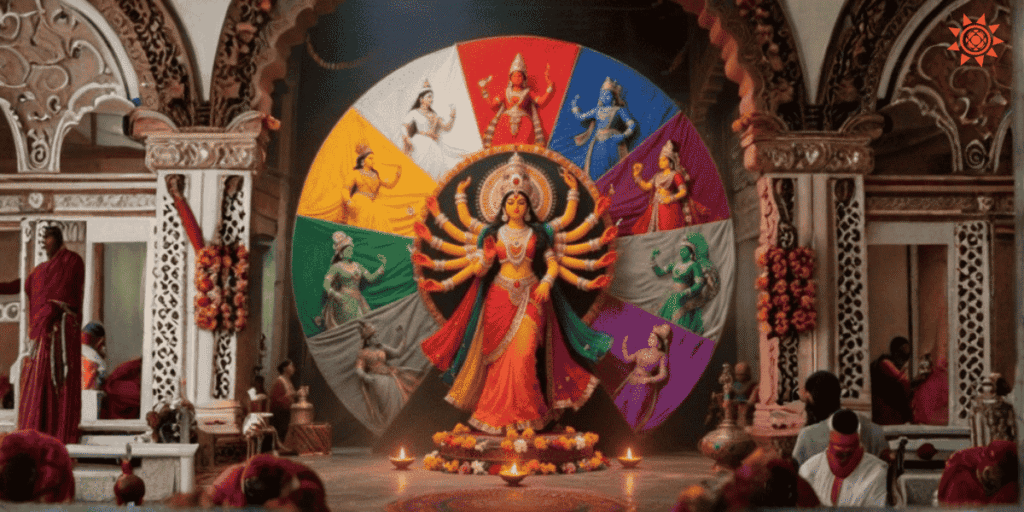
Navratri 2025 is not just a festival—it’s an emotion that connects millions of hearts. From the devotional chants in temples to the vibrant Garba nights under glittering lights, Navratri 2025 celebrates devotion, discipline, dance, and divine energy. Especially in states like Gujarat, Rajasthan, Maharashtra, and Madhya Pradesh, these nine nights feel like a magical journey.
Let’s explore the history, traditions, colors, lehengas, Garba, and muhurth of Navratri 2025 in detail.
Book Your Consultation Today and Receive Personalized Guidance for Navratri 2025 and Your Life Journey.
Historical Roots of Navratri
The word “Navratri” comes from Sanskrit: “Nava” (nine) + “Ratri” (nights). It’s a celebration of Goddess Durga’s victory over Mahishasura, symbolizing the triumph of good over evil.
- Gupta Period (4th–6th Century): Early temple inscriptions mention Durga worship and seasonal festivals.
- 7th Century CE: Historians trace the earliest organized Navratri celebrations to the Chalukya and Pallava dynasties in South India.
- Medieval Era: Navratri evolved differently across regions:
- Gujarat: Garba and Dandiya Raas
- West Bengal: Durga Pooja
- Tamil Nadu: Ayudha Pooja
- Today: Navratri has gone global. From New Jersey to Nairobi, Garba and Durga pandals bring Indian communities together.
Benefits of Celebrating Navratri
Navratri isn’t just about fasting or dancing—it’s a holistic festival with spiritual, physical, and cultural benefits:
- Spiritual Growth: Connects you with Maa Durga’s nine forms.
- Positive Energy: Fasting purifies the body and mind.
- Health Benefits: A simple sattvic diet detoxifies the system.
- Cultural Unity: Garba, Dandiya, and Aarti unite communities.
- Inner Strength: Invokes Shakti to overcome struggles.
- Preservation of Heritage: Keeps ancient customs alive.
Festive Joy: Music, colors, and dance bring happiness.
The Story of Garba—Its First Play & Deeper Meaning
The roots of Garba are as sacred as the dance itself. The word “Garba” comes from “Garbha Deep”—a clay pot with a lamp placed inside. This symbolizes the womb (life) and the soul (light).
Spiritual Benefits
- Aligns with the divine energy of Maa Durga
- Represents the eternal life cycle
- Cleanses aura and removes negativity
- Awakens inner Shakti (strength)
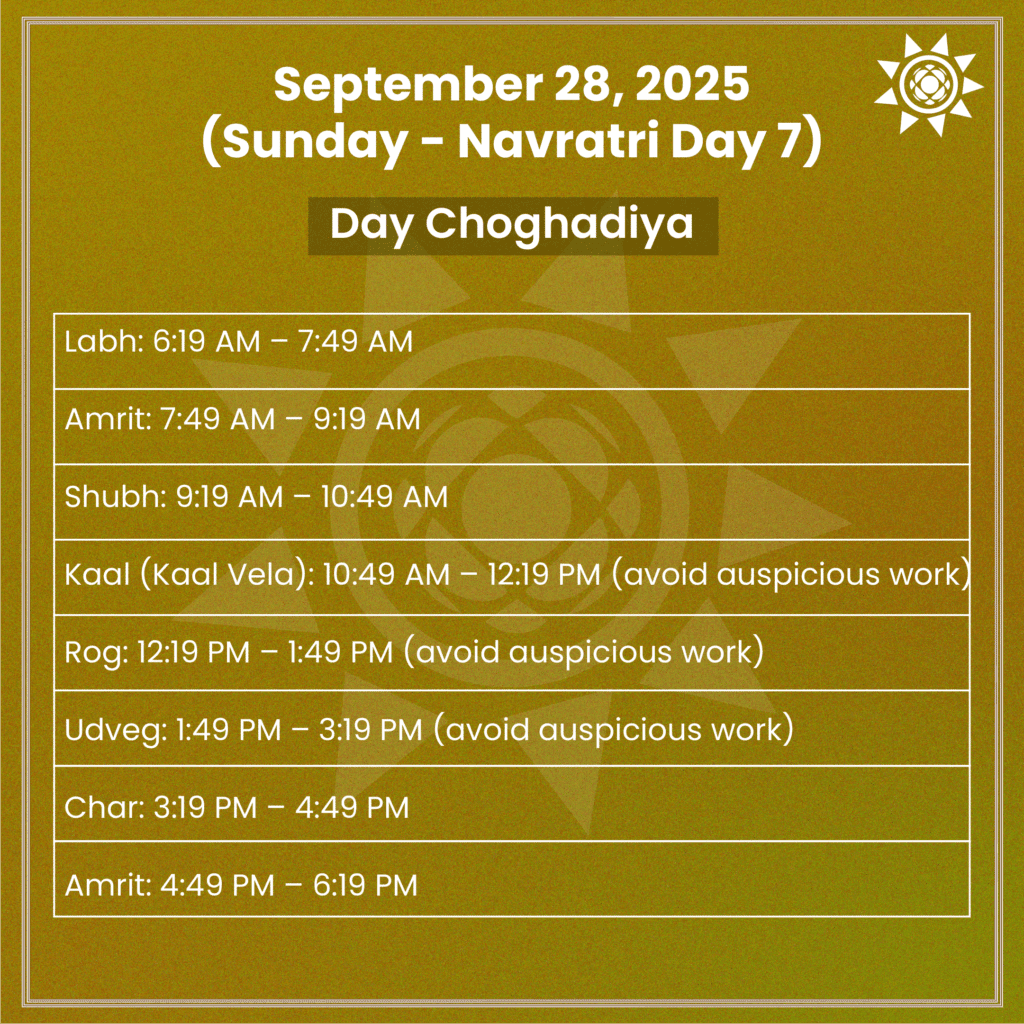
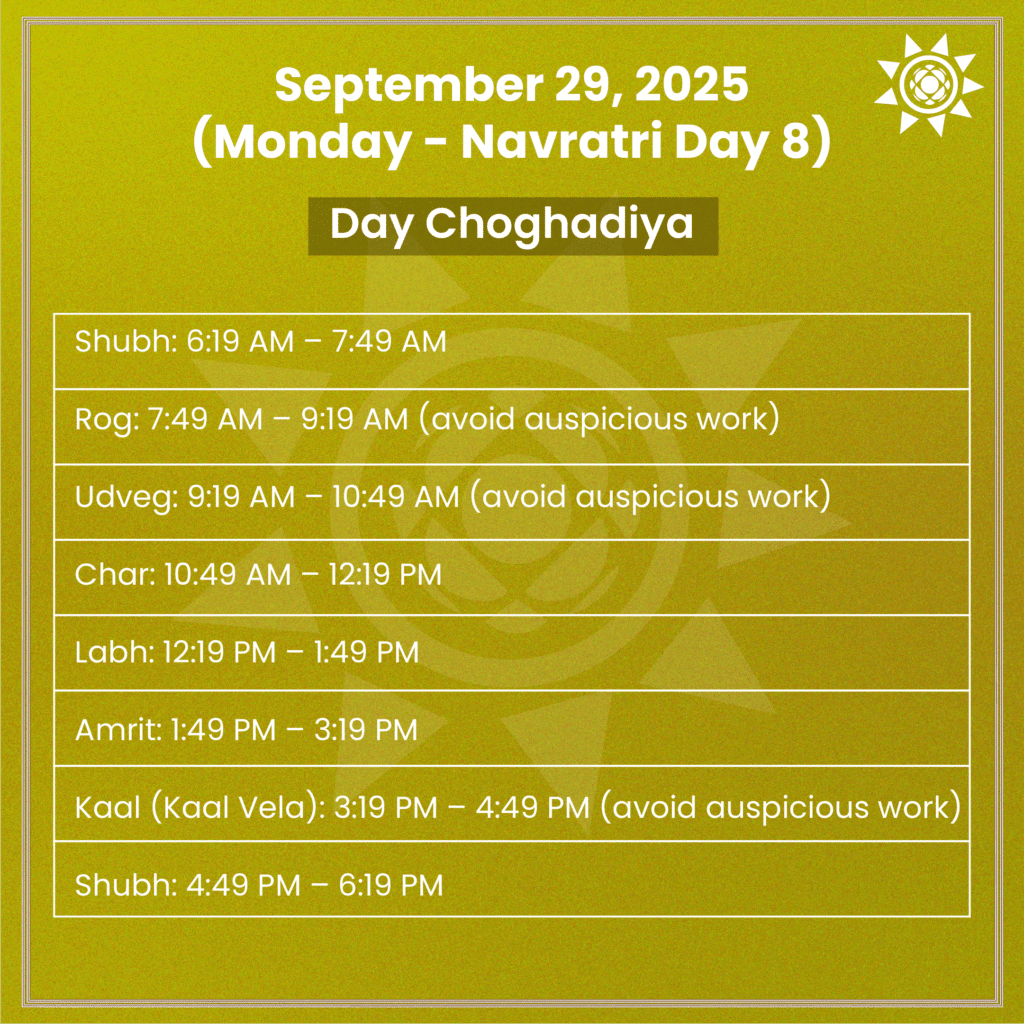
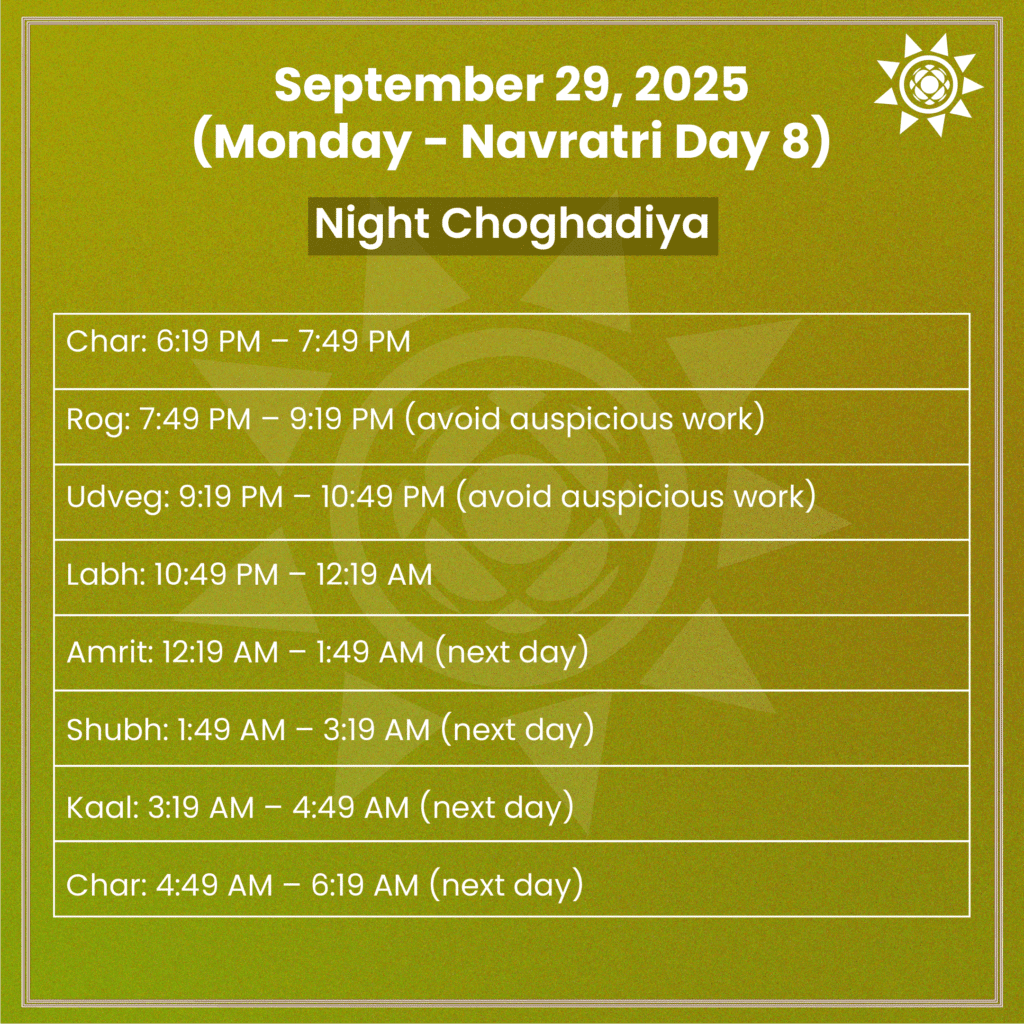
Muhurth of Navratri 2025 (Day 1–Day 9)
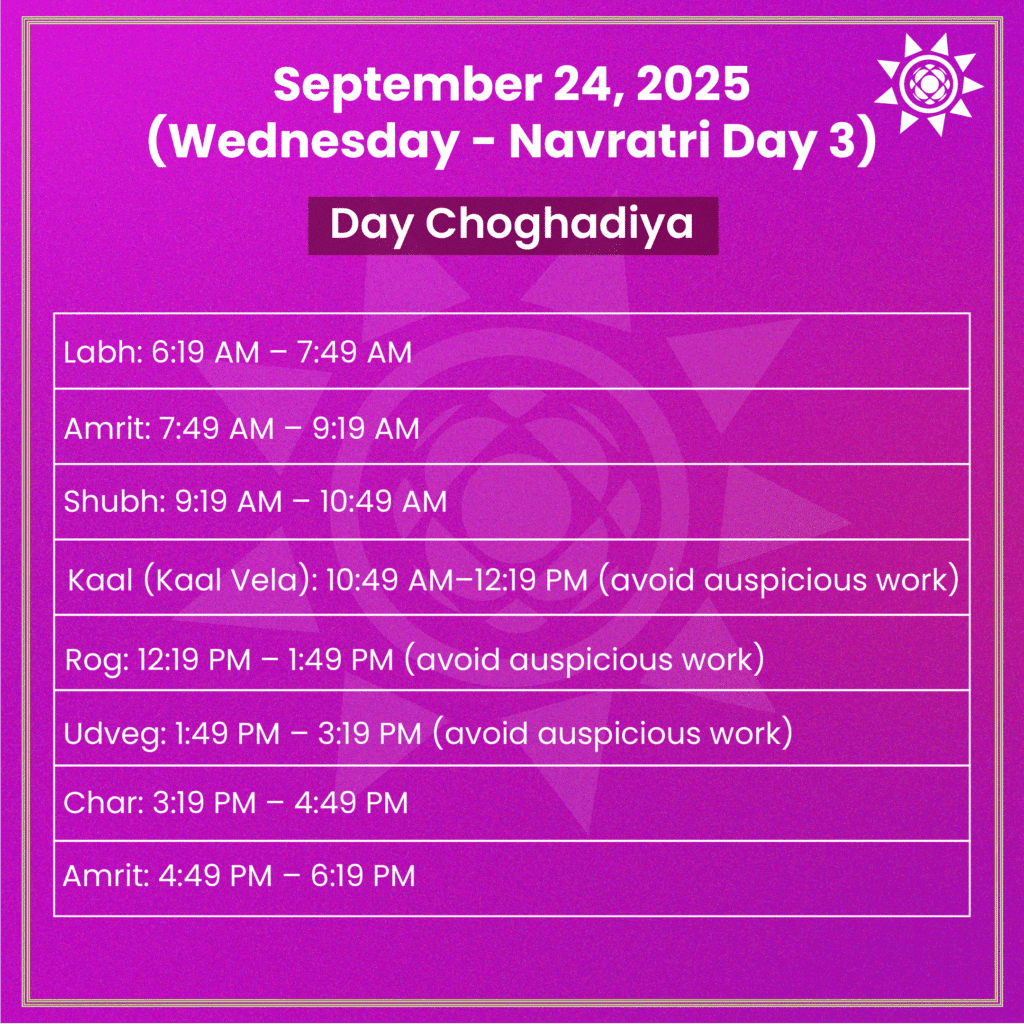
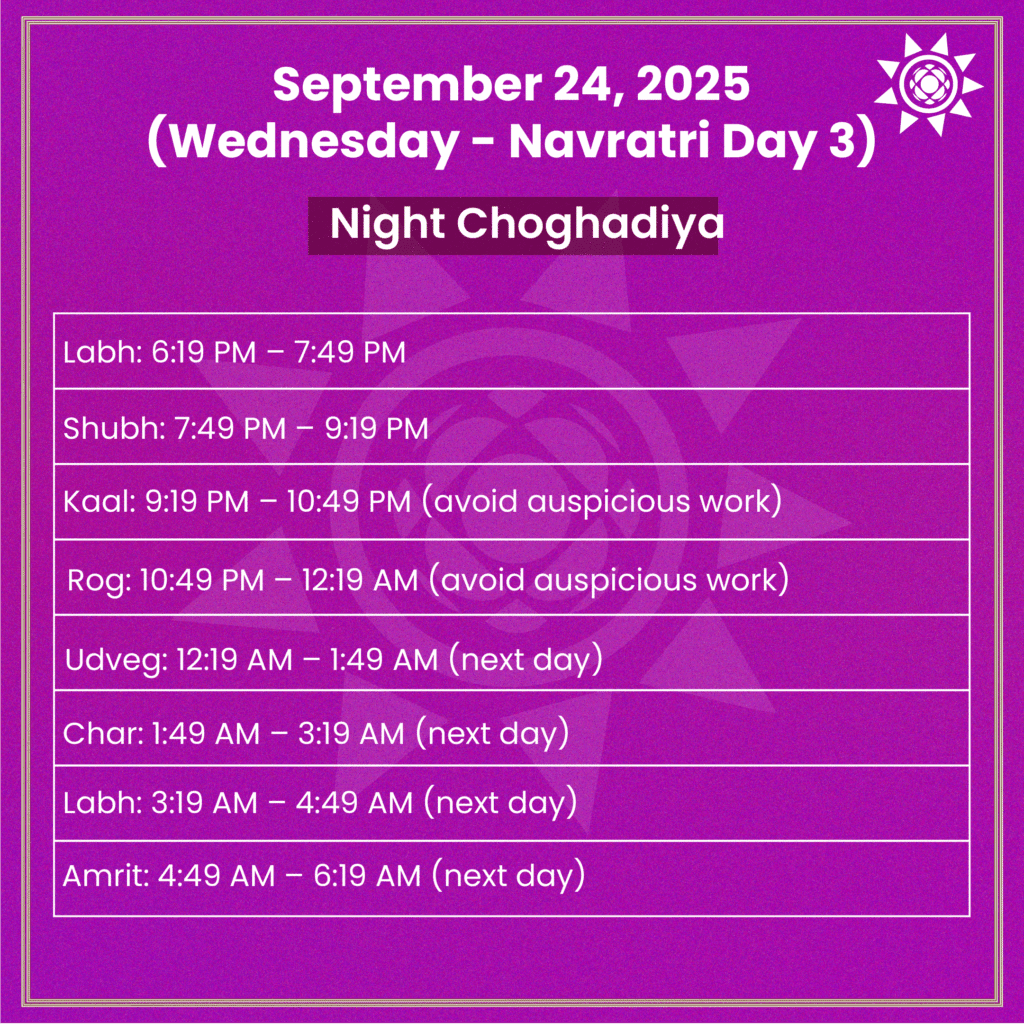
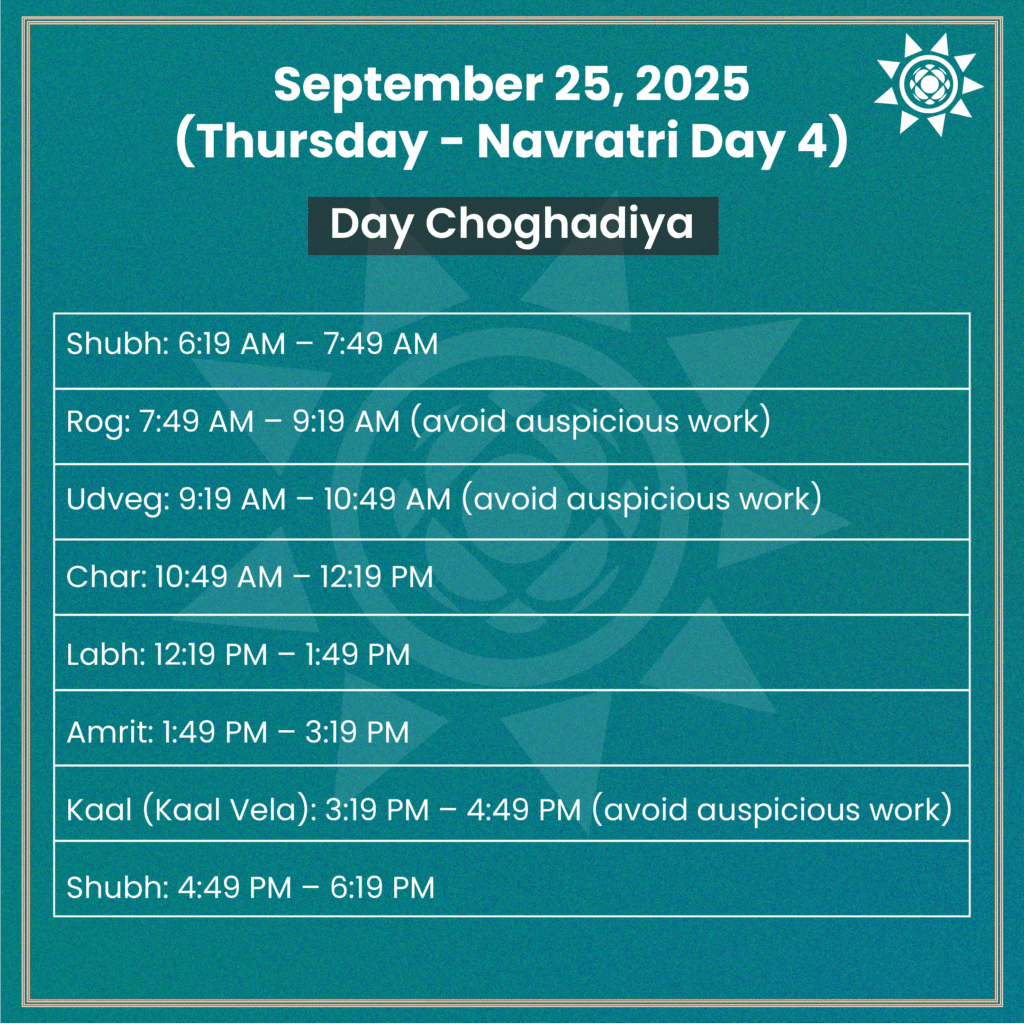
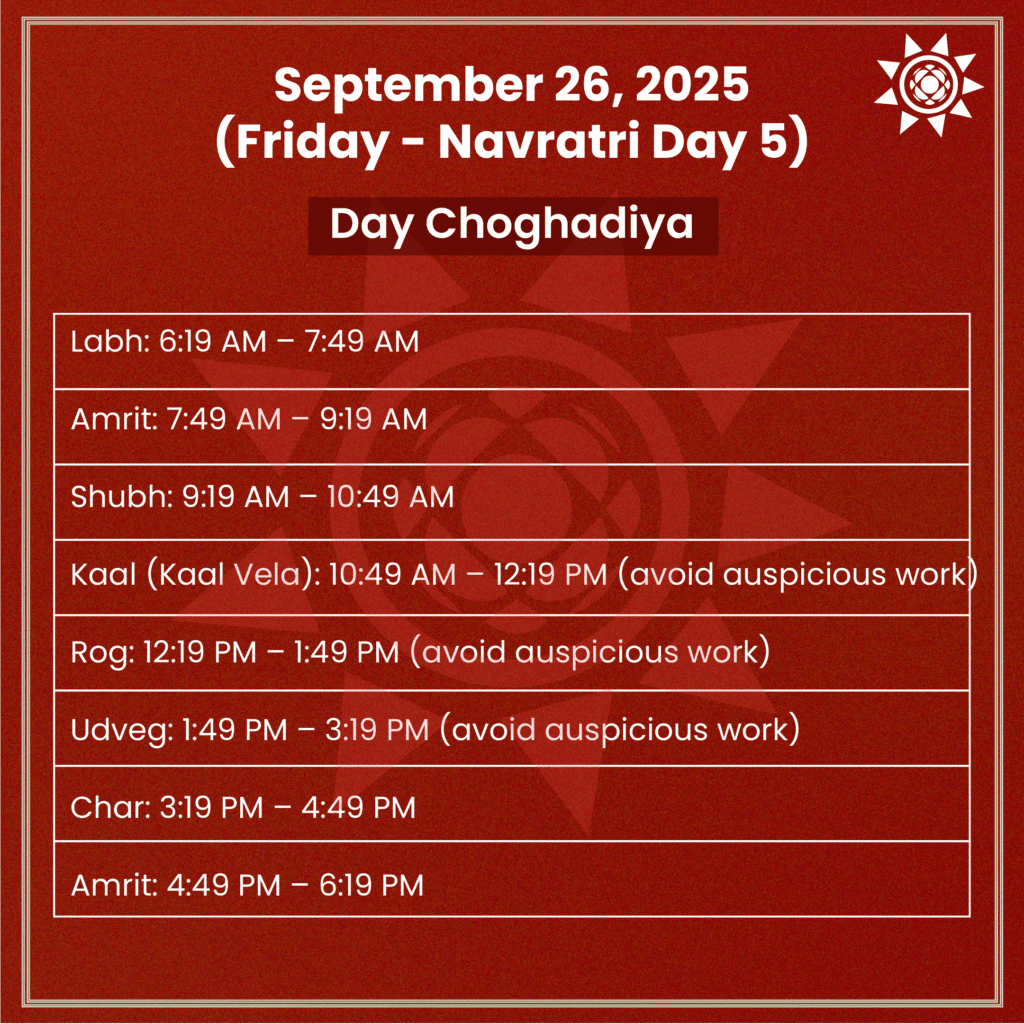
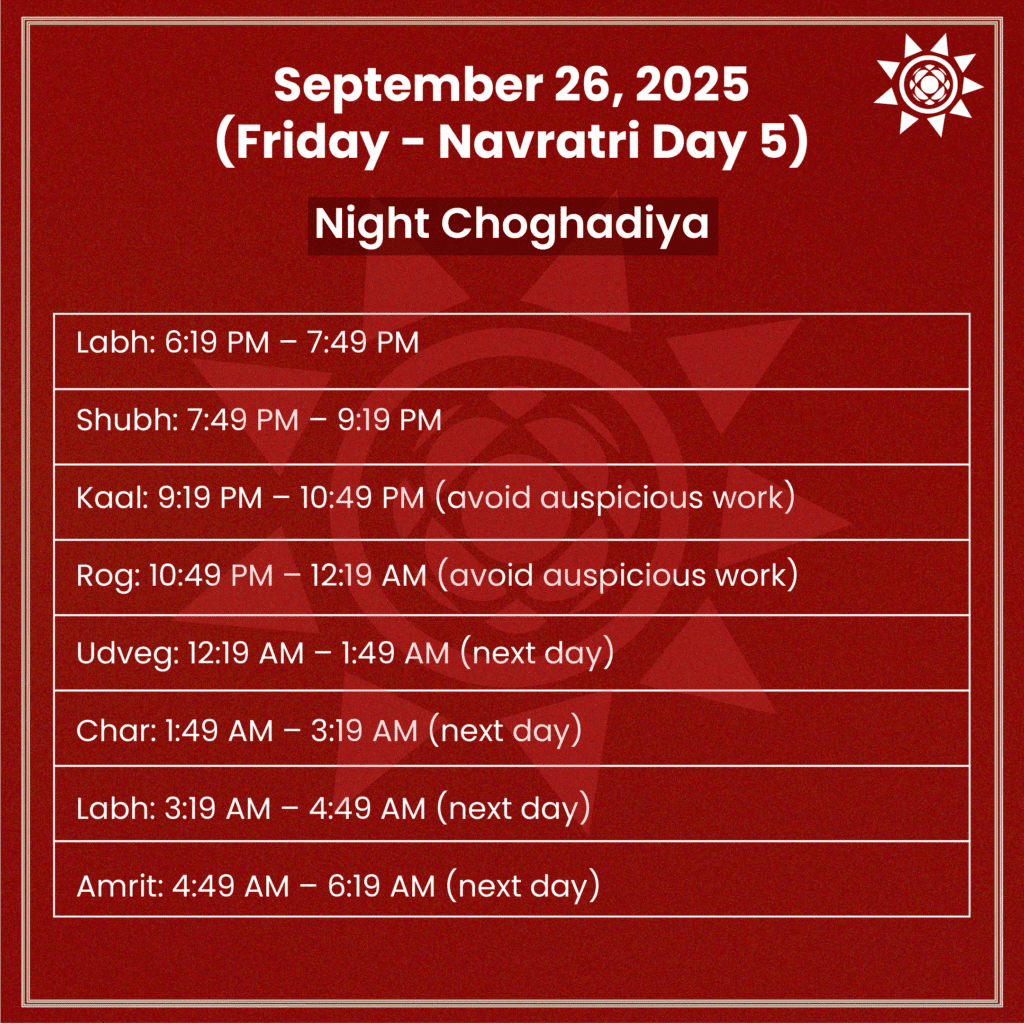
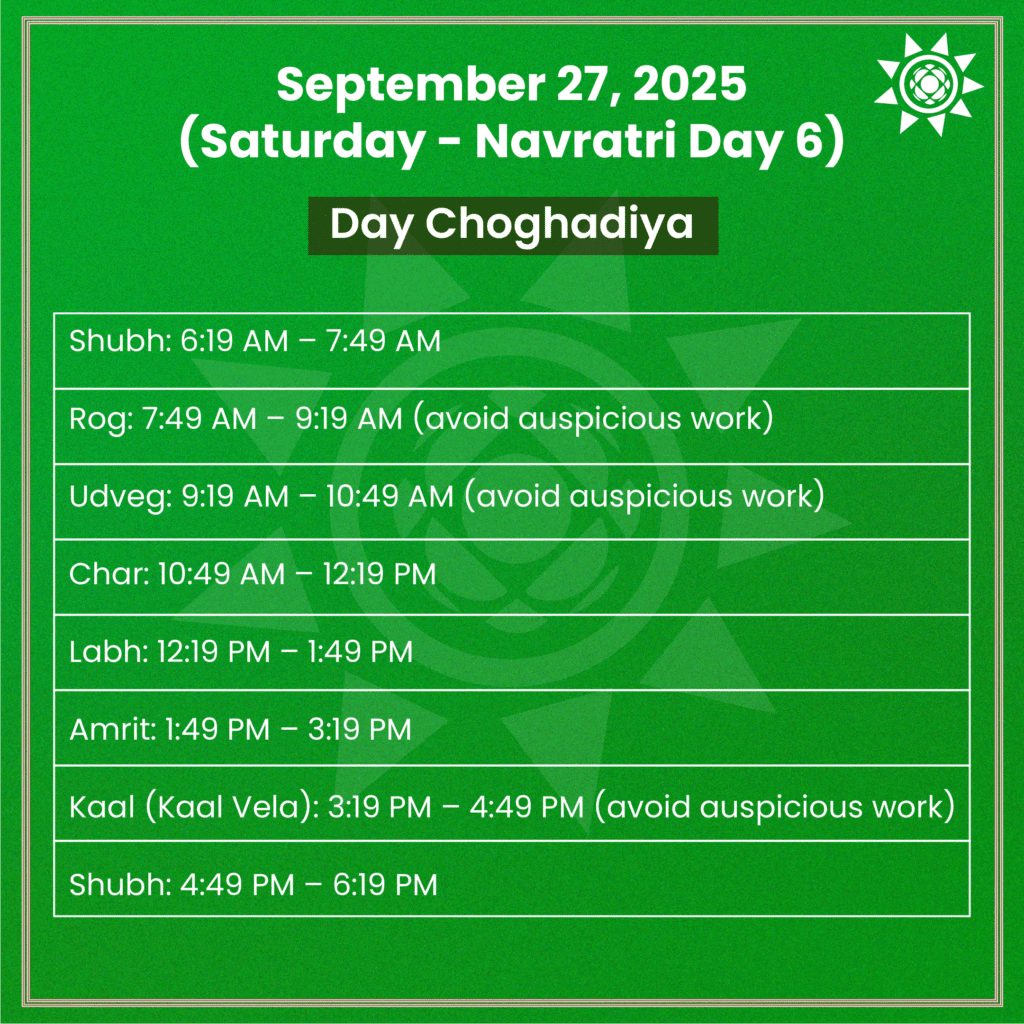
Muhurth means auspicious timing. Worship during these periods invites maximum divine energy.
Day 1 – Pratipada: Kalash Sthapana, Maa Shailputri’s blessings
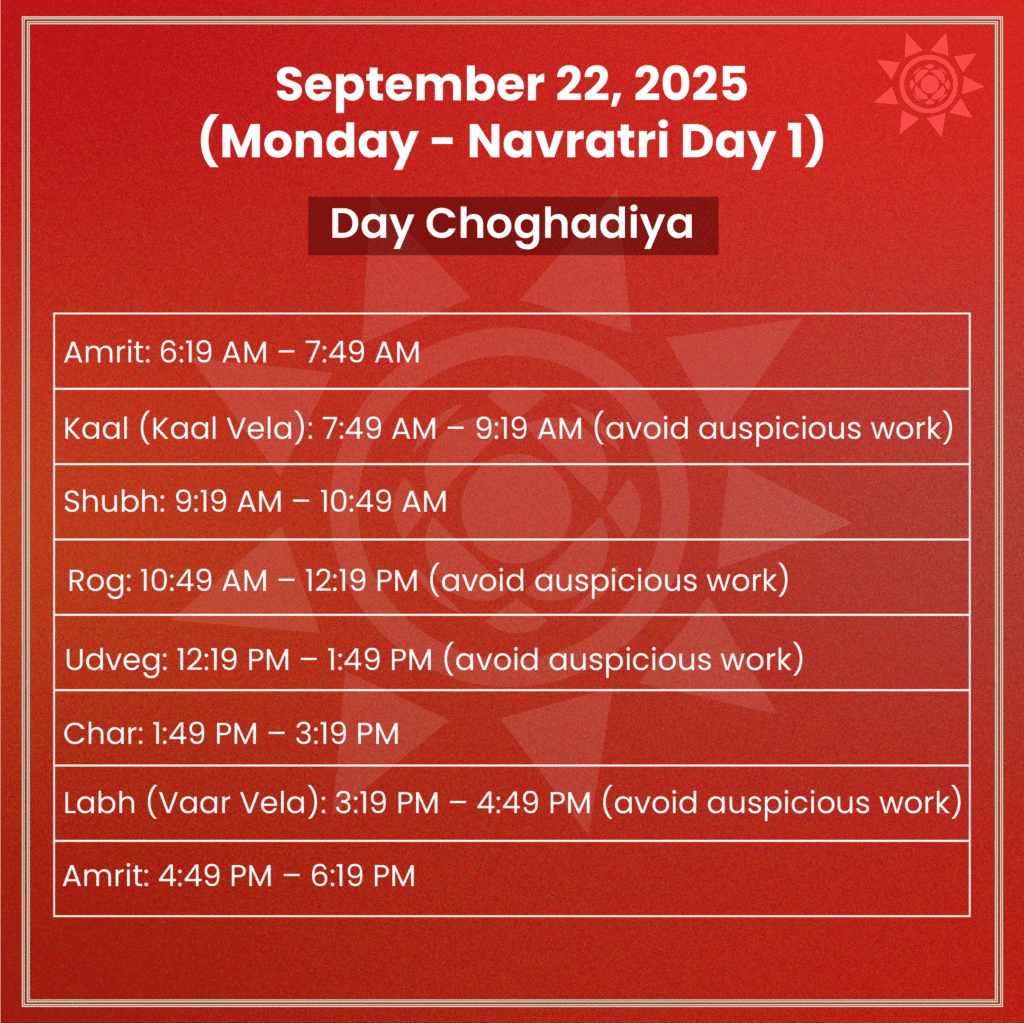
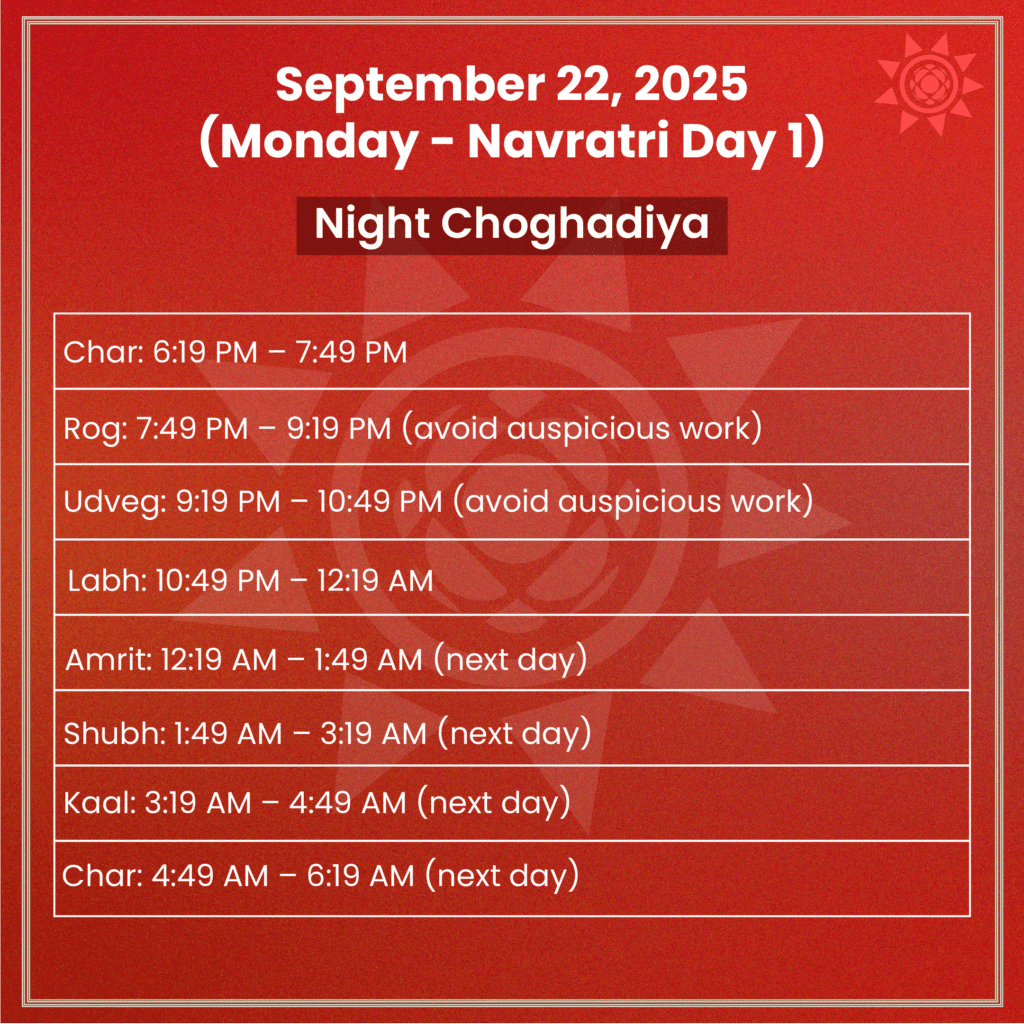
Day 2 – Dwitiya: Devotion to Maa Brahmacharini
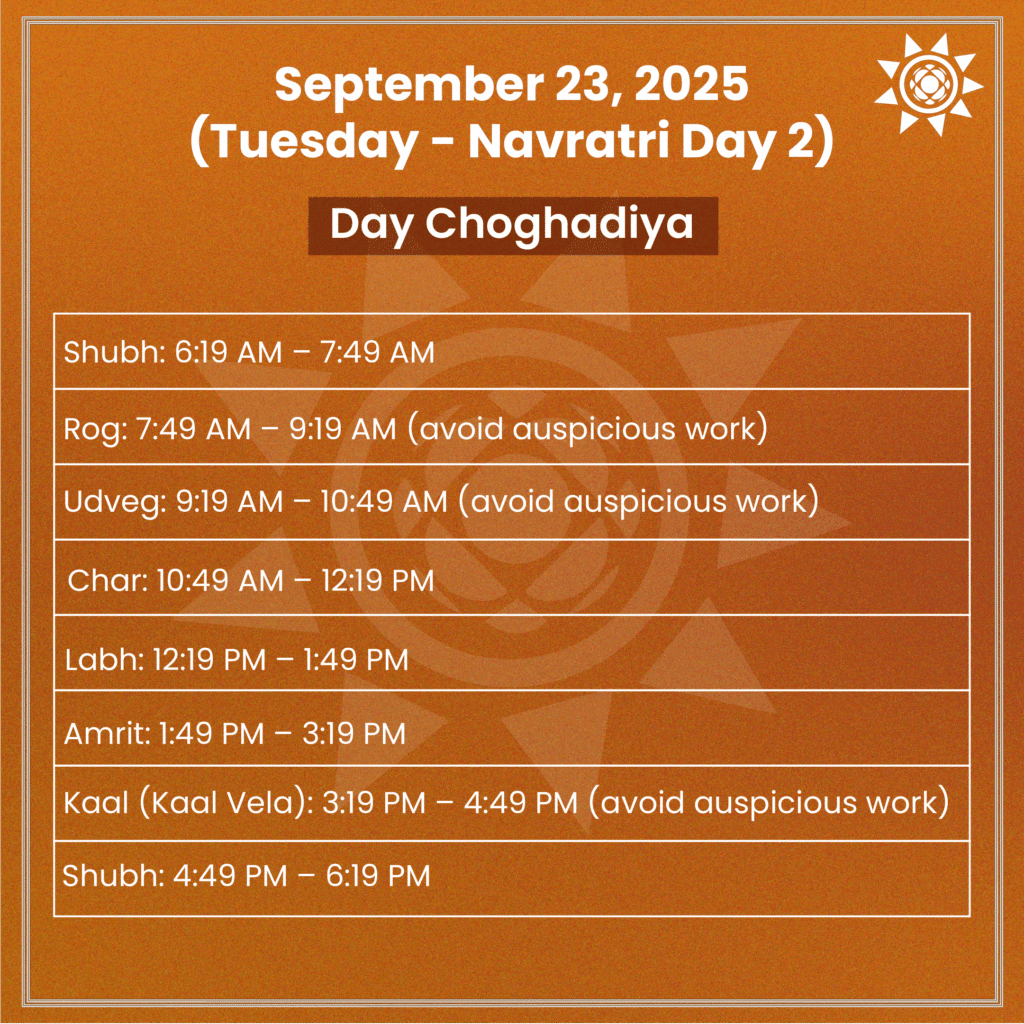
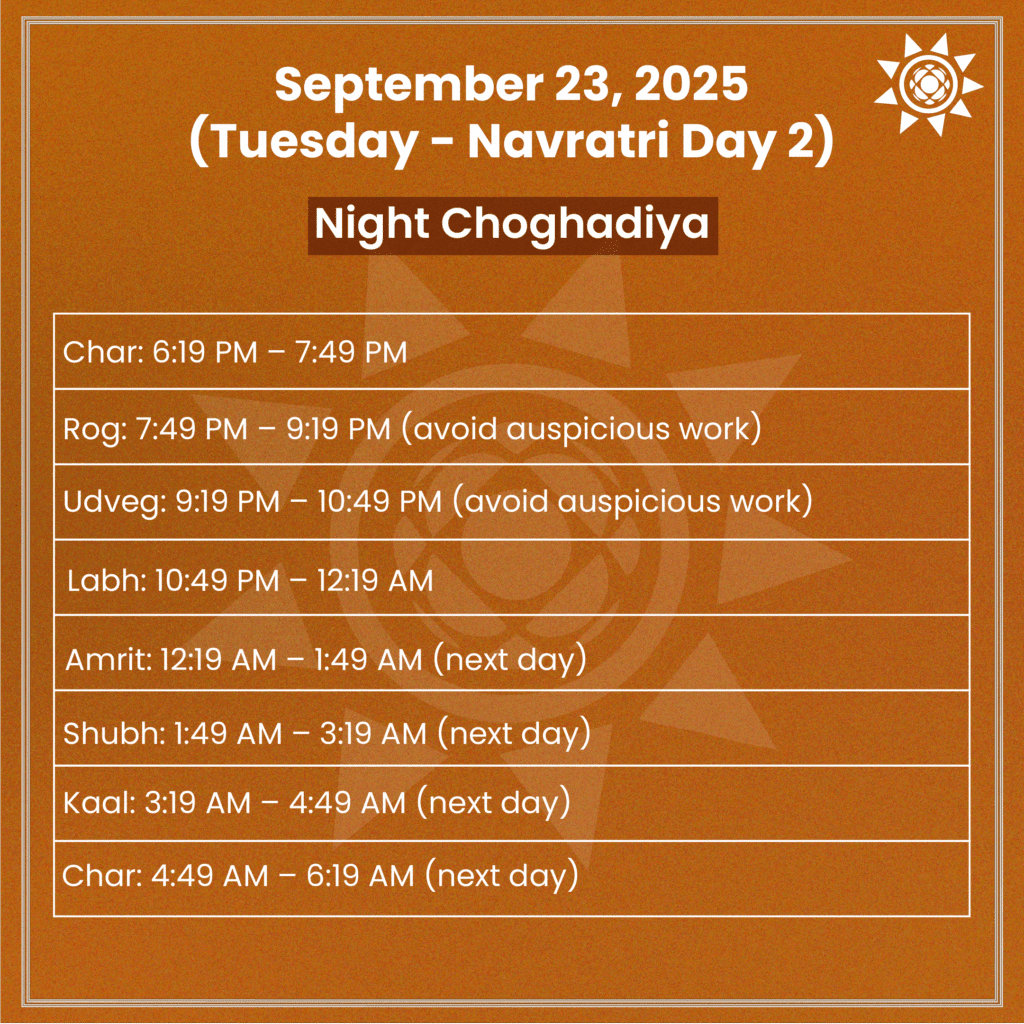
Day 3 – Tritiya: Protection from Maa Chandraghanta
Day 4 – Chaturthi: Prosperity through Maa Kushmanda
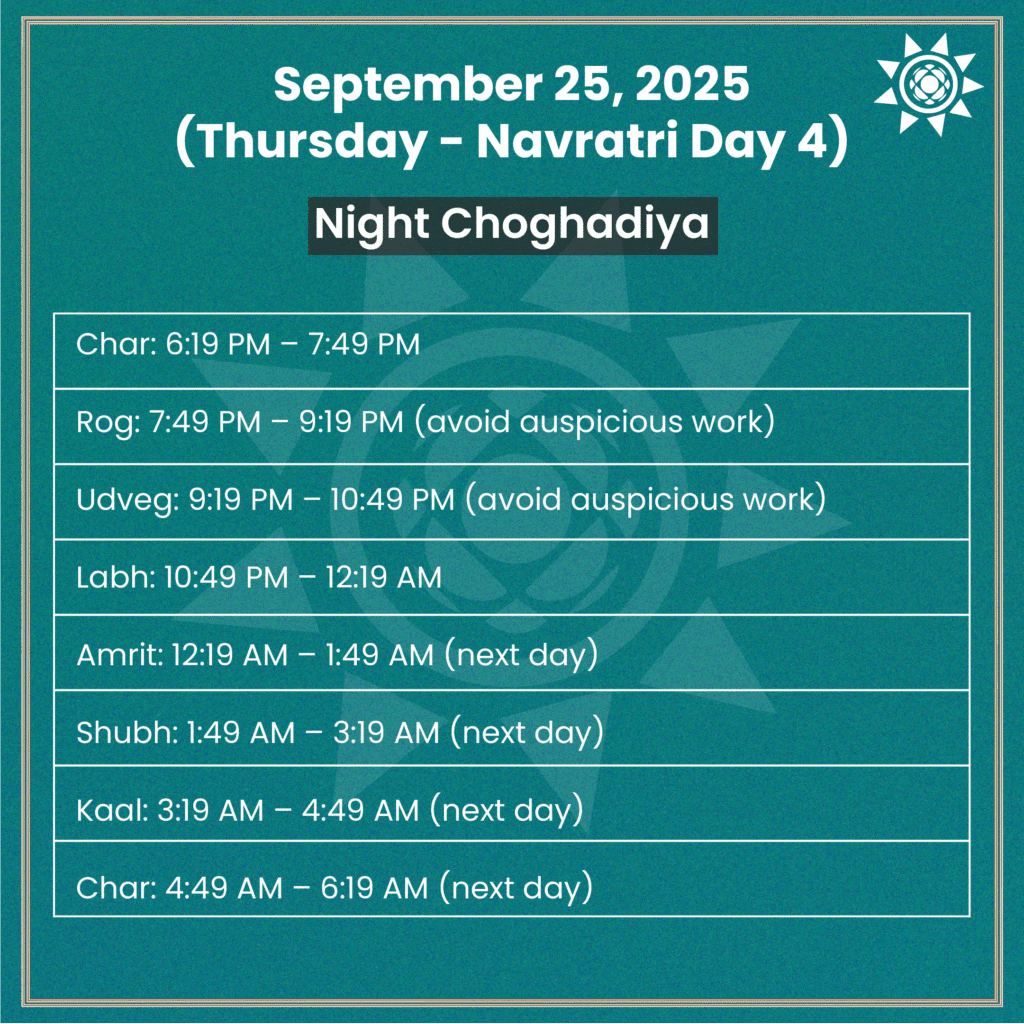
Day 5 – Panchami: Motherly love of Maa Skandmata
Day 6 – Shashti: Fulfillment of wishes by Maa Katyayani
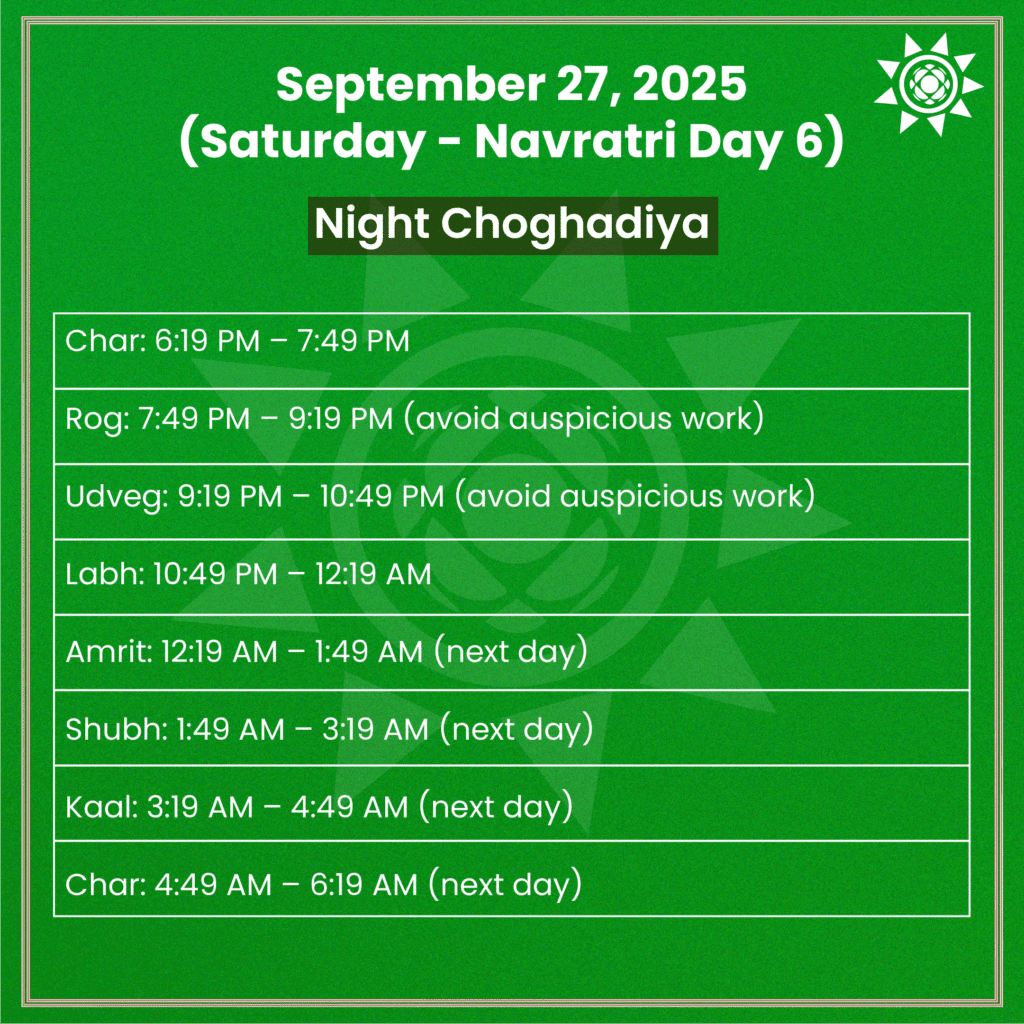
Day 7 – Saptami: Destruction of negativity by Maa Kalaratri
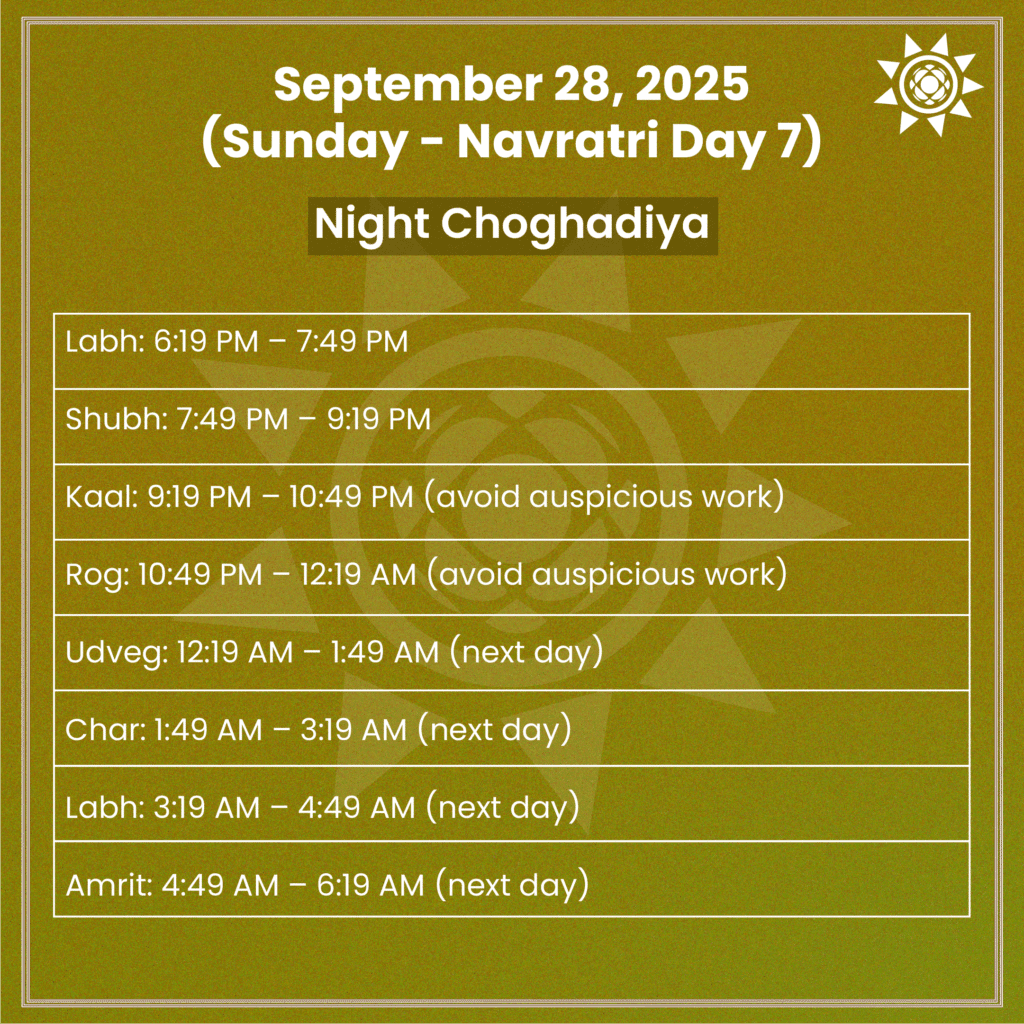
Day 8 – Ashtami: Purity and peace from Maa Mahagauri
Day 9 – Navami: Blessings and siddhis from Maa Siddhidatri
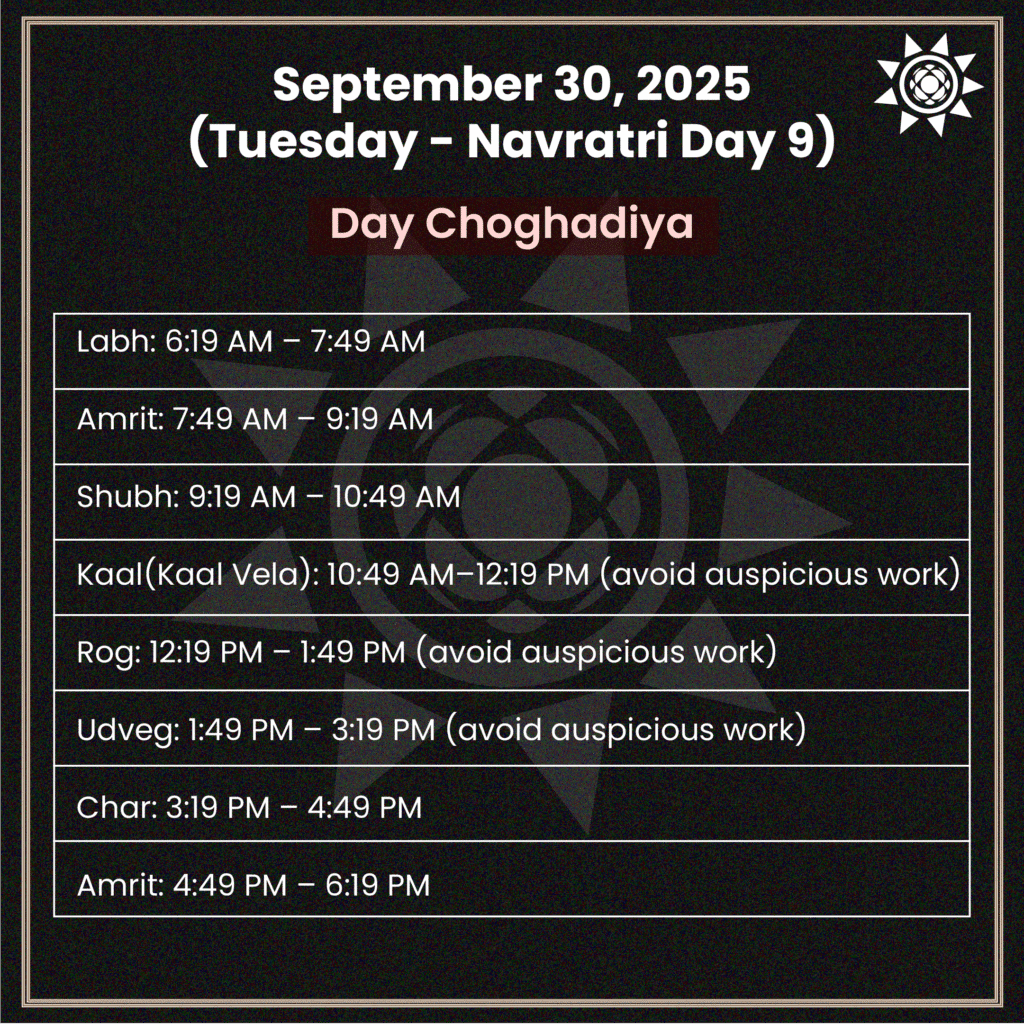
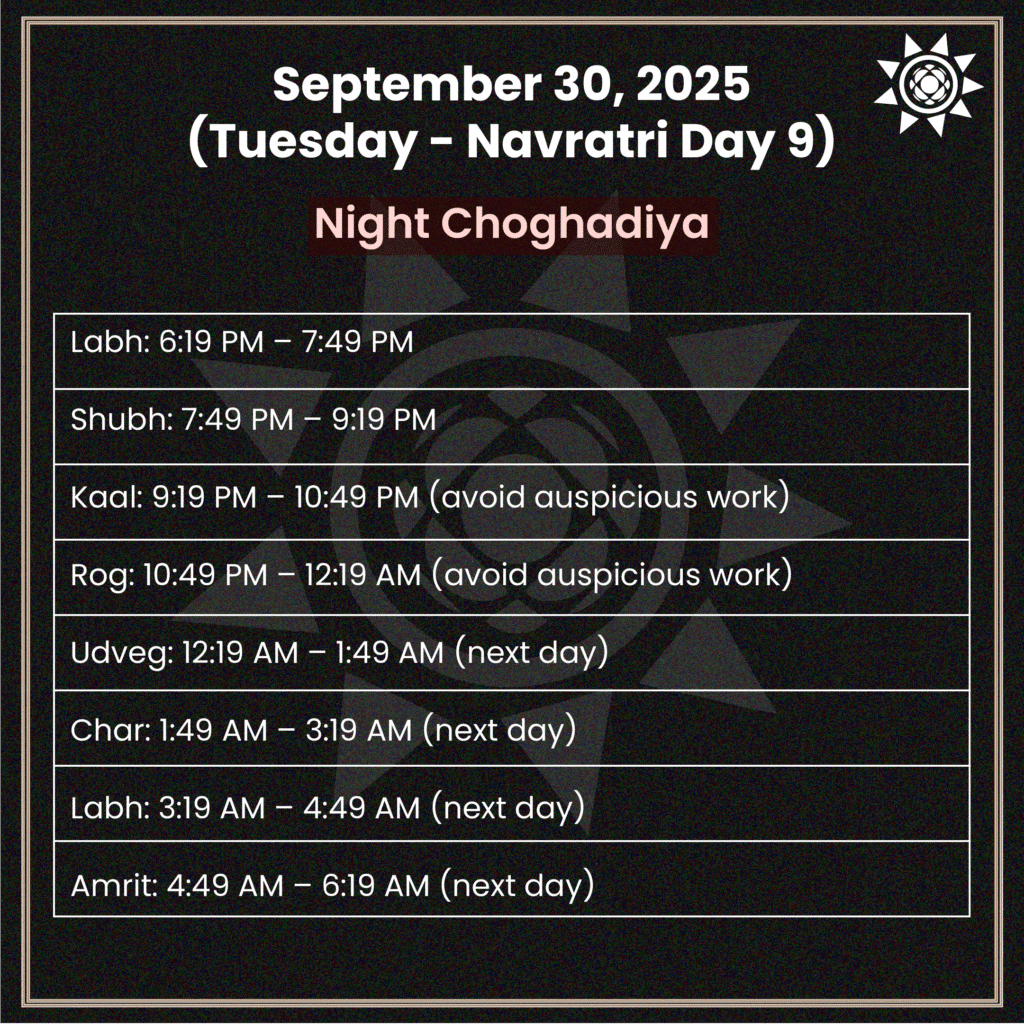
Short Note on Muhurth: Performing rituals like Aarti, Garba, Havan, or Kalash Sthapana at the right muhurth ensures cosmic harmony and positive vibrations in the home.
The Essence of Navratri
Navratri is not just nine nights of devotion—it is nine nights of self-discovery, celebration, and unity. From the spiritual strength of fasting to the cultural energy of Garba, every tradition carries centuries of meaning.
As you celebrate Navratri 2025, wear your colors proudly, twirl in your lehenga, follow the muhurth, and dance with full devotion—because Navratri is not just a festival; it is the rhythm of life itself.
Book a Consultation Now to Get Accurate Predictions, Auspicious Muhurth, and Powerful Remedies Tailored Just for You.